
Worried About Dublin Schools Redistricting? Here’s What the Numbers Say
- Katie Niccolini

When Dublin Schools released its proposed redistricting maps for the 2025–26 school year, along with the questions about bus routes and map boundaries was: “Will this lower our home values?”
As a parent, I understand the concern. As both a long-time property investor and a real estate professional, I’ve looked closely at how these changes affect home prices, and I can say with confidence the data says our values are secure.
Over the past few weeks, I’ve been asked this same question so many times that I decided to put everything I know into one place. My goal here is simple: to share the facts, ease concerns, and help our community feel more confident about what’s ahead.
Rumors of $50,000–$100,000 losses are circulating, and I know how frightening that sounds. For most families, a home is their biggest investment, and any decline in home value feels scary.
But the facts tell a different story. Redistricting is not a sign of decline, it’s a sign of growth. Families continue to move here because our schools remain among the best in Ohio. That demand helps keep our home values strong.
What’s Happening
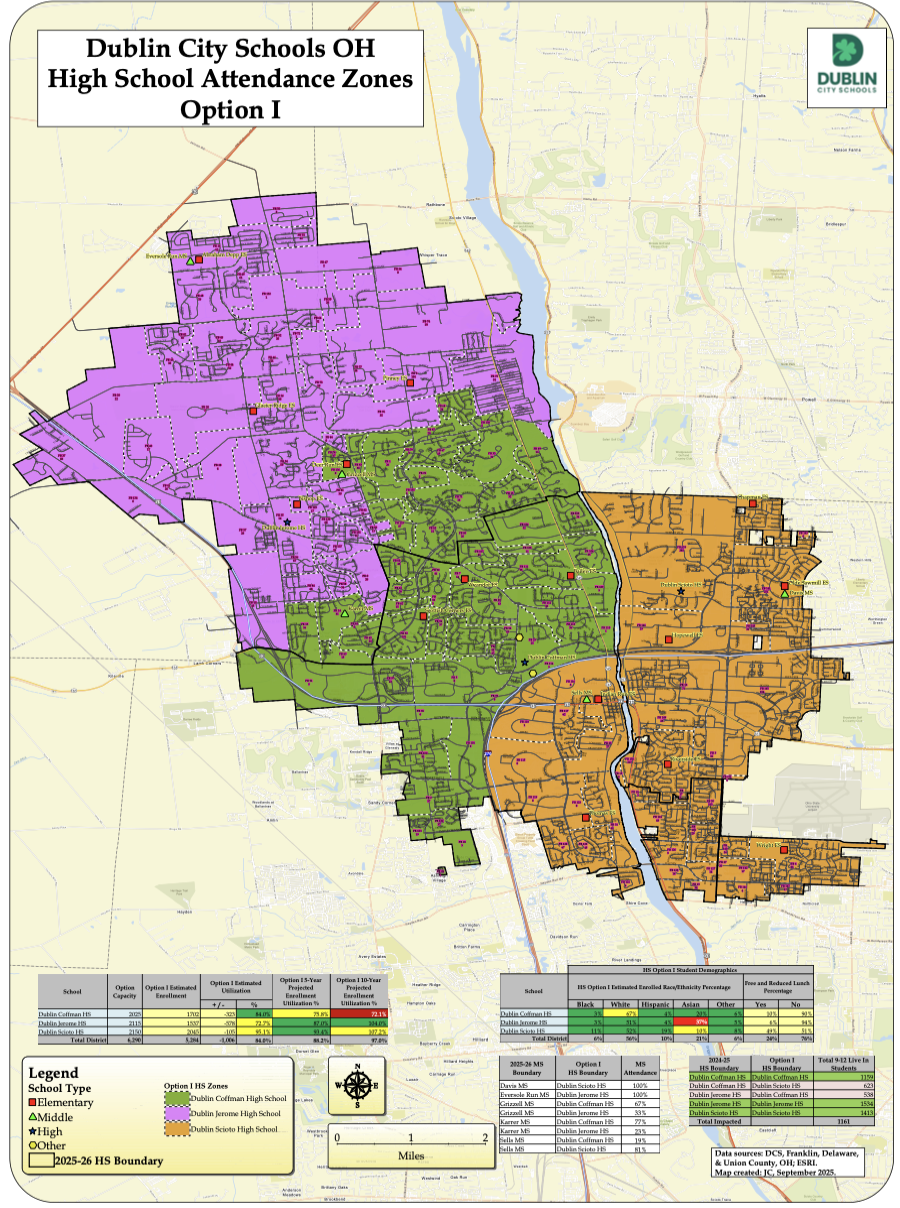
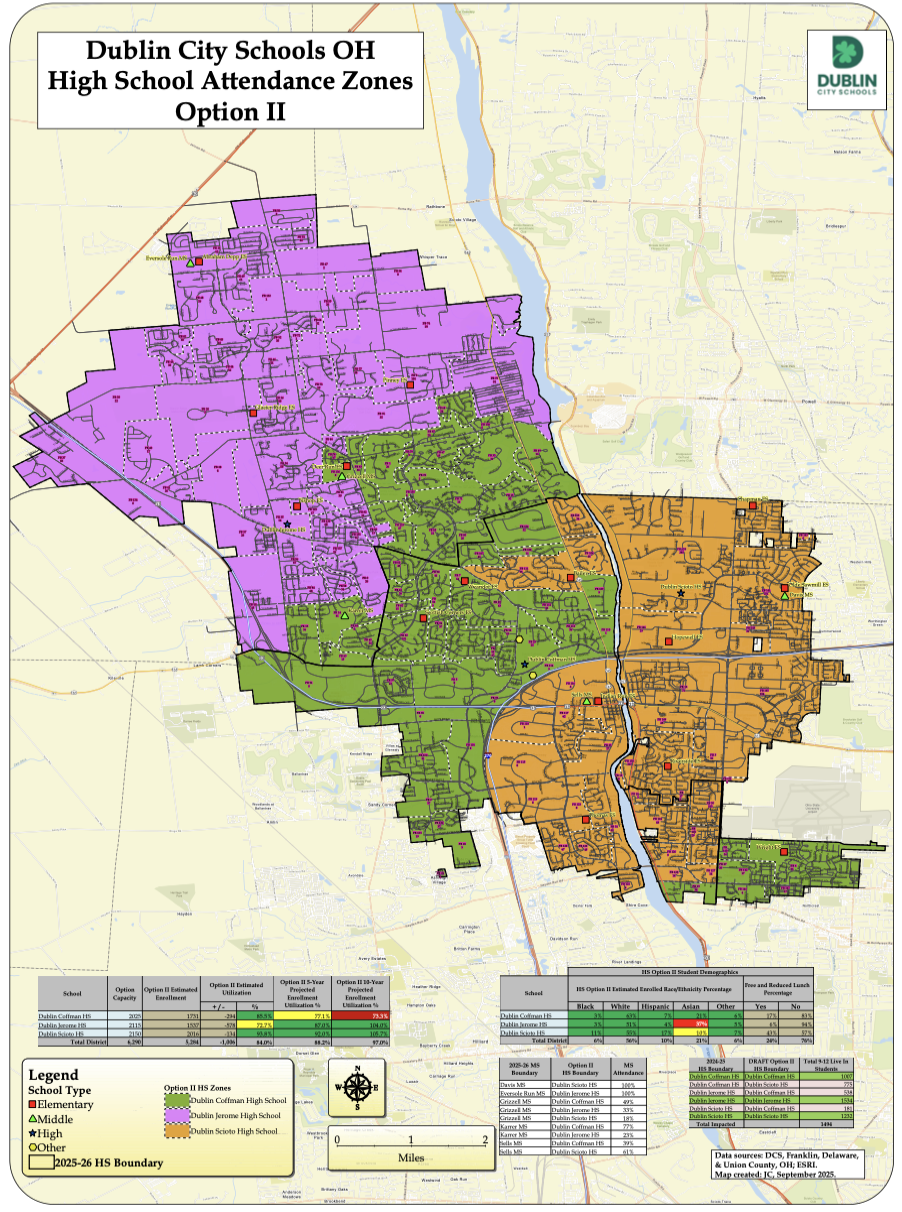
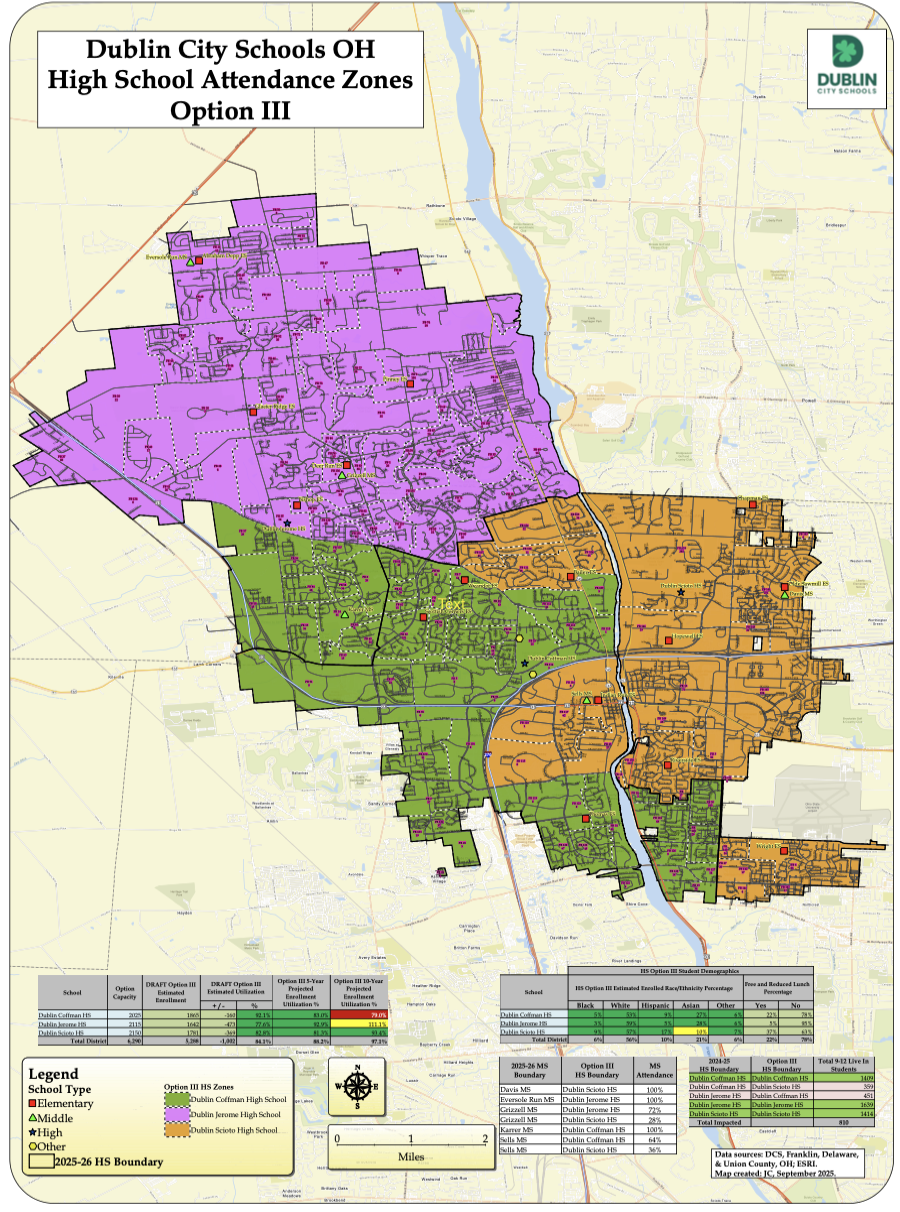
Dublin City Schools is exploring multiple redistricting proposals to rebalance student populations across its three high schools. Enrollment is rising faster than the district’s facilities can handle, so these boundary adjustments are being considered to distribute growth more evenly.
To put that in perspective:
- As of its latest district profile, Dublin City Schools serves more than 16,000 students across 25 schools (elementary through high school). Dublin City Schools
- The district is recognized as one of the fastest-growing in the region, with projections suggesting an annual increase of around 270 new students through 2032. Dublin City Schools
- In a recent board meeting, it was shared that Dublin has welcomed 1,400 new students since 2015–16, with high school enrollment expected to grow by over 800 students by 2035. Citizen Portal
These numbers show the pressure is real, and the need for redistricting is not speculative, it’s a response to sustained growth.
This isn’t a unique challenge. Olentangy Local Schools, a neighboring district, has repeatedly redrawn boundaries over the past 20 years and yet still saw its home values more than double during that same period (per Zillow data). zillow.com
In other words: districts that are shrinking rarely redraw maps. Redistricting is typically a signal that families want to be there and demand has outpaced capacity. Dublin isn’t shrinking, it’s adapting to a growing community and the needs that come with it.
The Concerns About Property Values
The most common question I’ve heard from families and homeowners over the past few weeks is whether being redistricted will make their homes less desirable to future buyers. Many are worried that a boundary change could mean fewer showings, lower offers, or even a loss in long-term value.
The two concerns that come up most often are:
-
“If my home gets reassigned to a different high school, will buyers see it as less valuable?”
-
“I’ve heard people saying homes could lose $50,000–$100,000 in value, is that true?”
Those fears are understandable. School reputation is one of the biggest emotional drivers in real estate decisions, especially for families choosing where to settle. But when we look at actual market data, both locally and nationally, the numbers tell a very different story.
What the Research Says
Studies by Black (1999) and Kane, Riegg & Staiger (2005) found that school redistricting can cause short-term price dips of about 3–5%, typically lasting one to three years.
In Dublin, where the median home price is approximately $619,900 (Realtor.com, 2025; Zillow, 2025; Redfin, 2025), that would translate to a temporary decrease of roughly $18,000–$31,000, far less than the six-figure losses some homeowners have worried about.
Importantly, those studies examined districts where families were reassigned between schools with major quality disparities, such as moves from high-performing schools to significantly weaker ones. In those cases, perception of inequality, not the boundary change itself, was the main driver of short-term value loss.

Why Dublin is Different
All three of Dublin’s high schools — Coffman, Jerome, and Scioto — are well-resourced, fully accredited, and offer exceptional academic, arts, and extracurricular programs. The district reports a 97.1% four-year graduation rate, robust AP and IB course offerings, and that 91.7% of graduates continue on to higher education (Dublin City Schools District Profile).
Independent evaluators echo those results: Niche gives Dublin City Schools an A+ overall rating and ranks it among the top districts in Ohio, while the Ohio Department of Education’s State Report Card awarded the district a five-star rating for learning excellence.
Because Dublin maintains such consistent performance and strong reputation across all its schools, any short-term effects from redistricting would likely be smaller and resolve faster than what the national studies observed in districts with significant quality gaps between schools.
How Dublin’s Growth Sustains Home values
Research shows that when school redistricting occurs, most of the market reaction happens before any boundary changes are implemented. Price fluctuations during that period are usually driven by perception and uncertainty, not by actual differences in school quality. Once new boundaries take effect and schools continue performing well, home values tend to rebound within one to three years, particularly in high-performing districts (Kane, Riegg & Staiger, 2005).
A later analysis by Brasington & Haurin (2006) found that long-term property values depend far more on the overall quality and consistency of a district than on any single boundary change. This aligns closely with what we see in Dublin: a stable, high-achieving district that continues to attract new families, maintain community investment, and perform well year after year.
You can see this dynamic reflected in how buyers search for homes. On major platforms like the MLS, Zillow, and Realtor.com, most buyers filter for “Dublin City Schools” rather than a specific high school. The district name appears prominently at the top of listings, while individual school assignments are listed in smaller text. In practice, buyers are purchasing the reputation and consistency of the Dublin district, not one specific building or boundary line.
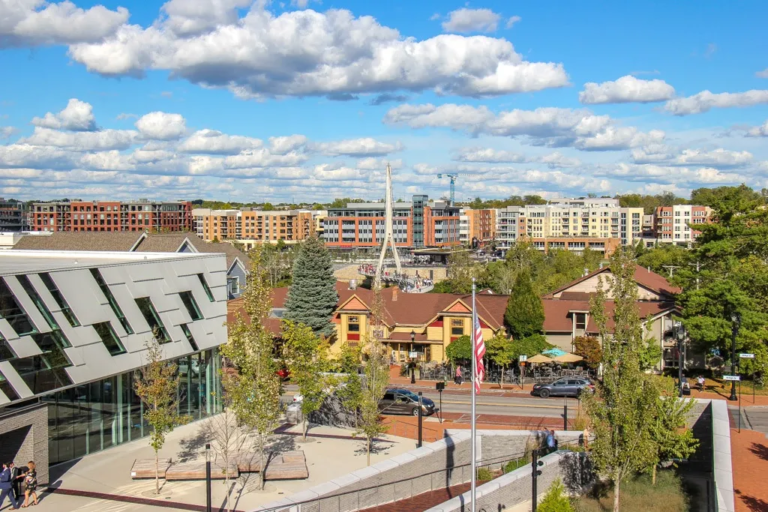
That’s why homes across all high school zones in Dublin consistently command a premium compared to nearby areas. The district’s overall excellence, growth, and community reputation are what sustain long-term value, and those fundamentals remain unchanged.
Local Proof
- Olentangy Schools: Despite constant redistricting, that district’s home values have soared. Over multiple cycles, the market has remained strong, proving that redistricting itself doesn’t erode value.
- Dublin in the 2000s: When Jerome opened and boundaries shifted, people worried. But prices continued to rise across the city during and afterward.
- Dublin Home Appreciation Today:
- According to NeighborhoodScout, Dublin has averaged about 7.14% annual home appreciation, with a cumulative 10-year appreciation near 99.37%. (NeighborhoodScout)
- Redfin data shows the median home price in Dublin recently at $715,000, up 22.2% year-over-year. (Redfin)
- Zillow reports the average home value in Dublin at about $572,518, up ~3.5% over the past year. (Zillow)
These stats illustrate how resilient and in-demand Dublin real estate remains, even through changes.
Other Factors That Matter More Than Boundaries
It’s worth remembering:
- Home maintenance and updates: A renovated kitchen, new roof, or finished basement often adds more resale value than a boundary shift could subtract.
- Neighborhood desirability: Parks, trails, proximity to Columbus, and Dublin’s amenities drive buyer interest.
- Market conditions: Interest rates, inventory, and economic factors influence pricing more than redistricting in a strong market.
These are the factors buyers truly weigh, and Dublin is well-positioned on all of them.
What This Means for Homeowners
Here are the key takeaways I want to leave you with:
- Redistricting means growth, not decline. Dublin is expanding because families want to live here.
- Any dip would be smaller and shorter-lived here. The 3–5% figures come from districts with huge school gaps; in Dublin, those impacts would be muted and recover faster.
- The Dublin brand is what buyers pay for. Homes across all zones carry the same premium because buyers are investing in the district as a whole.
Closing Thoughts
I know this process has been stressful. I feel it as a parent, too. But after years of experience as both a property investor and real estate professional, and seeing how Dublin has consistently performed, I can say I truly believe:
Our home values are secure.
Redistricting is proof that Dublin remains one of the most desirable school districts in Ohio. That reputation is durable. That foundation is what keeps our values strong. Boundary lines won’t change that.
So many of you have reached out with questions, and I’ll keep doing my best to share clear and reliable information. If you’d like to stay updated as the district makes decisions, along with occasional insights about the Dublin housing market, subscribe to our newsletter.